
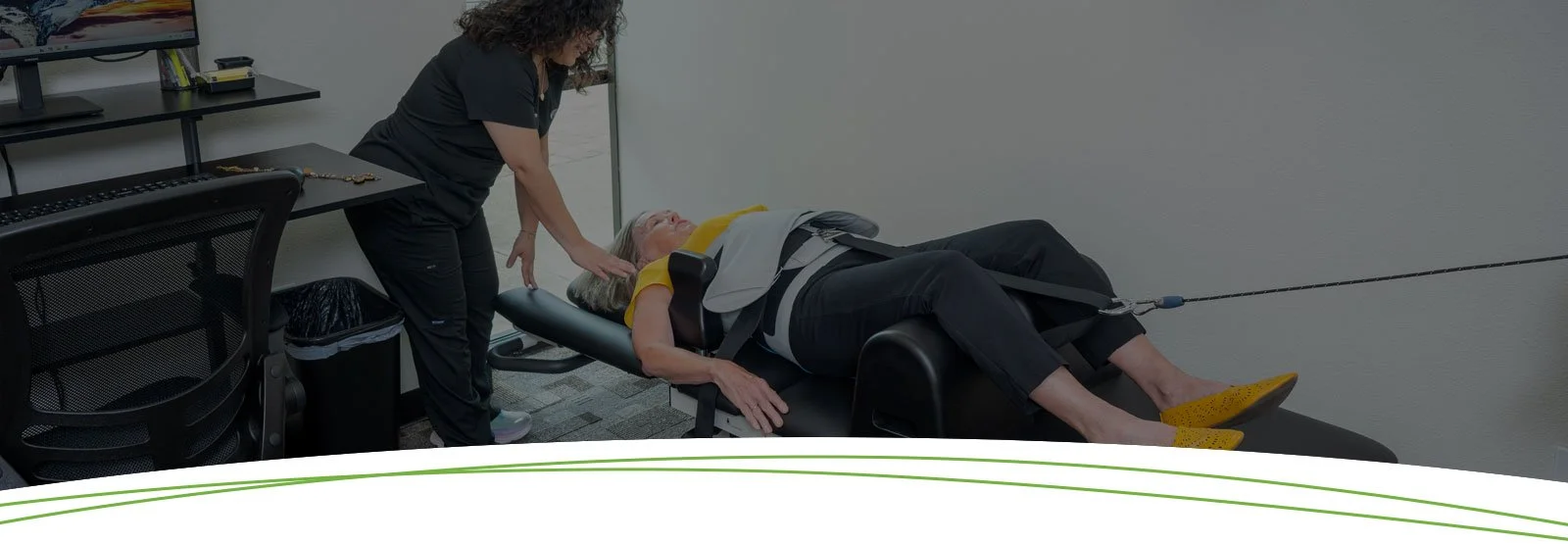
Nonsurgical Spinal Decompression
Bulging or herniated spinal discs and other degenerative disc diseases are often the cause of back and neck pain as well as numbness and weakness in the arms and legs. If you suffer from debilitating lower back or neck pain that limits your mobility and affects your ability to perform routine daily tasks, talk to Dr. Thomas at Village Chiropractic. He will evaluate your spine and talk about the type of pain you’re experiencing to determine if spinal decompression would be helpful for repairing your damaged or degenerated discs without surgery.

What is Nonsurgical Spinal Decompression?
Nonsurgical spinal decompression is a type of motorized spinal traction that is used to reduce the pressure on the spinal discs. This is done by gently stretching the spine for a period of 15 to 30 minutes per treatment, over a period of several weeks, depending on the patient’s condition.
The goals of relieving pressure on the spinal discs during decompression include:
Potentially relieving back pain without spinal surgery.
Reducing pressure on the discs so that water and nutrients can surround the discs, making it easier for the discs to heal.
What Conditions Can Be Treated Effectively with Nonsurgical Spinal Decompression?
Nonsurgical spinal decompression can be used for several different back pain conditions, including:
Degenerative disc disease
A bulging disc or herniated disc
Spinal stenosis
A pinched nerve, which is sometimes the cause of sciatica (shooting pain down the back of the leg)

How is Nonsurgical Spinal Decompression Performed at Village Chiropractic?
If Dr. Thomas determines that spinal decompression is an appropriate treatment option for your back pain, you will be scheduled for several sessions over the course of several weeks. This allows results to happen slowly without sudden or too much pressure on the spine. For many patients, the Back on Trac spinal traction technology will be included for lower back pain relief.
What are the Benefits of Nonsurgical Spinal Decompression?
The primary benefit of spinal decompression treatment is reduced back pain without surgery.This includes a better range of motion. It can also be an option for patients who may be a high-risk patient for back surgery.
Frequently Asked Questions About Spinal Decompression
-
Nonsurgical spinal decompression is a conservative treatment that uses controlled traction to gently stretch the spine. The goal is to reduce pressure on certain spinal structures and create conditions that may help relieve symptoms associated with some disc and nerve problems.
-
Spinal decompression is designed to be a gentle treatment and should not be painful for most appropriately selected patients. Some people feel a stretching sensation or pressure during treatment
-
Spinal decompression may be considered for some patients with symptoms associated with bulging or herniated discs. Whether it is appropriate depends on the location and severity of the disc problem, your symptoms, and other health factors.
-
Spinal decompression may be considered when sciatica is related to certain lumbar disc or nerve-compression problems. Because sciatica can have different causes, an evaluation is necessary to determine whether decompression is appropriate.
-
Both use traction principles, but clinical spinal decompression allows the chiropractor to control and adjust the amount and direction of traction for the individual patient. An inversion table primarily uses a person's body weight and an inverted position to create traction.
-
The number of sessions varies based on your diagnosis, how long you have had symptoms, their severity, and how you respond to care. Your chiropractor can recommend a treatment plan after completing an evaluation.
-
Spinal decompression may be considered for certain patients with disc-related pain, sciatica, degenerative disc problems, or other appropriate spinal conditions. It is not suitable for everyone, which is why a health history and examination are important before treatment.
